🍂 A Little Love for Overlooked Vegetables
Over the years, celery root has become one of my personal favourites as a chef, particularly when creating seasonal menus and dishes for social dining. Its versatility, delicate flavour and beautiful texture make it an ingredient I regularly return to.
Also known as celeriac, celery root isn't exactly the most attractive vegetable in the produce aisle. With its rugged, wiry exterior, it's easy to overlook. But beneath that intimidating appearance lies a delicate, slightly sweet and nutty flesh that transforms into a beautifully silky purée.
Proof that you shouldn't judge a vegetable by its appearance!
Winter squash is another underrated favourite. Beautiful, naturally sweet and incredibly versatile, yet often passed over because of its size. What do you do with an entire squash when you only need half?
The good news is that one squash can become several meals, and even its seeds make a delicious garnish.
And let's not forget Brussels sprouts! I believe one of the most common reasons people dislike them is simply overcooking. When cooked too long, they lose their pleasant texture and can develop strong, sulfurous flavours.
Did you know Brussels sprouts can actually become sweeter after a frost? It's one reason they're such a wonderful late-autumn vegetable here in Ontario.
A hard sear brings out their natural sweetness and nutty flavour while keeping them tender with just a little bite.
For another layer of colour and texture, I've added purple potatoes. Their beautiful colour comes from naturally occurring plant pigments called anthocyanins, while their earthy flavour complements the sweetness of the squash.
Together, these vegetables create a satisfying, colourful dish without relying on excessive butter, added sugar or flour-based thickeners.
Sometimes a little olive oil, proper seasoning and thoughtful cooking techniques are all you need to let vegetables shine.
🌿 A Little Nutrition on Your Plate
Beyond their beautiful colours and flavours, these vegetables contribute a variety of nutrients that make them worth including in your regular diet.
Brussels Sprouts — Provide vitamins C and K, folate and dietary fibre. Vitamin C supports normal immune function, while fibre supports digestive health.
Celery Root — Provides potassium, vitamin K and fibre. Its delicate flavour and creamy texture also make it a wonderful alternative to heavier vegetable purées.
Winter Squash — Orange-fleshed varieties provide beta-carotene, which our bodies convert into vitamin A. They also contribute fibre and vitamin C.
Purple Potatoes — Contain anthocyanins, naturally occurring antioxidant pigments responsible for their beautiful purple colour. They also provide potassium and vitamin C.
Shallots — Contain naturally occurring flavonoids and other plant compounds. Pickling brings brightness and acidity to the dish.
Speckled Pea Microgreens — Tender young greens that can contribute vitamin C and other plant nutrients, depending on their variety and growing conditions.
Chef's Thought: Eating a variety of colourful vegetables is one of the simplest ways to introduce different vitamins, minerals and beneficial plant compounds into your everyday meals.
🌱 Chef's Tips — Make the Most of Your Ingredients
Don't Judge Celery Root by Its Cover
Look for a firm, heavy celery root without soft spots.
Don't be afraid to trim away the rough exterior generously. The beautiful flesh is underneath.
For the silkiest purée, cook the celery root until completely tender before blending.
Chef's secret: A little reserved cooking liquid and good olive oil can create a beautiful texture without needing excessive cream or butter.
Save the Other Half of Your Squash
Winter squash is one of those vegetables people often avoid simply because they don't know what to do with the leftovers.
You don't have to cook the entire squash at once!
Wrap the cut surface tightly or place the remaining squash in an airtight container and refrigerate. Use it within a few days, or cook and freeze portions for another meal.
A few of my favourite ways to use leftover squash include:
-
Roasting for grain bowls and salads
-
Blending into a creamy autumn soup
-
Folding into risotto or fresh pasta
-
Puréeing for sauces
-
Adding to your next vegetable curry
One squash, several delicious meals!
Don't Throw Away the Seeds
Roasted squash seeds add a wonderful crunchy texture to salads, soups and roasted vegetable dishes.
The secret is drying them thoroughly before roasting. Too much moisture will cause them to steam rather than become crisp.
Try experimenting with rosemary, smoked paprika or a little sea salt.
It's a simple way to reduce kitchen waste while creating another delicious ingredient.
Let the Pan Do the Work
One of the biggest mistakes people make with Brussels sprouts is moving them around too much.
Place them cut-side down in a properly heated pan and resist the urge to constantly stir, shake or flip.
That uninterrupted contact allows natural sugars to caramelize, creating a beautifully golden exterior.
Avoid overcrowding the pan. Cook in batches if necessary.
A proper sear makes an enormous difference to both flavour and texture.
Finish Fresh
Always add delicate microgreens at the end.
Speckled Pea microgreens bring a fresh garden-pea flavour and tender, crisp texture that contrasts beautifully with the warm roasted vegetables.
A little freshness goes a long way.
A Final Thought from Chef Jess
Good cooking isn't always about adding more ingredients. Sometimes it's about discovering just how much flavour was already there.
A little attention to technique, a willingness to try unfamiliar vegetables and a few fresh finishing touches can transform everyday ingredients into something special.
I hope this recipe inspires you to give an overlooked vegetable another chance and perhaps discover a new favourite along the way.
Happy cooking!
Chef Jess 🌱
Founder, Grower & Chef
Little Greens Co.
Chef-grown. Grown for flavour.
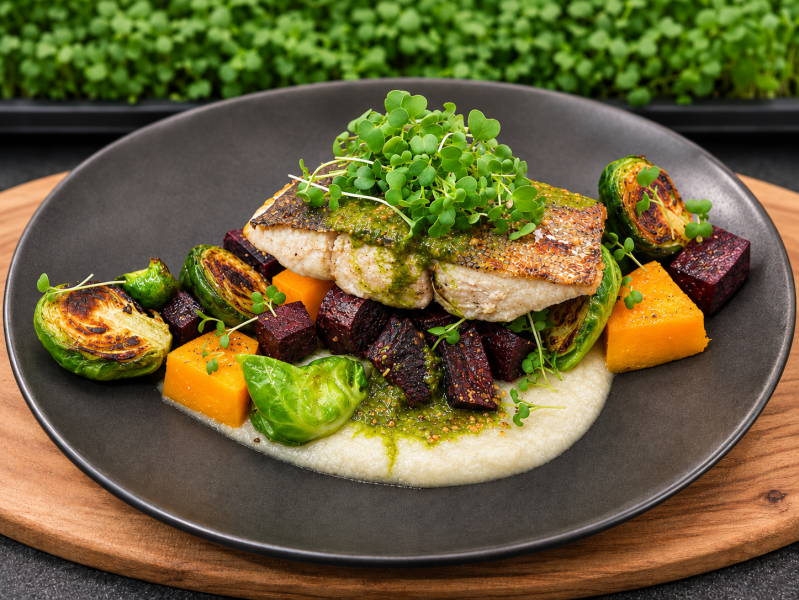
Mahi Mahi with Autumn Vegetables
With Roasted Winter Squash, Silky Celery Root Purée, Pickled Shallots & Speckled Pea Microgreens
By Chef Jess | Little Greens Co.
A celebration of autumn vegetables, natural flavours and simple cooking techniques. Enjoy this beautiful warm seasonal vegetable medley as an appetizer or side dish, or transform it into a complete entrée with your favourite protein. For my version, I've chosen mahi-mahi finished with Little Greens Pesto.
Recipe
Serves: 4 as an appetizer or side dish, or 2 as a main course
Preparation: 25 minutes
Cooking: Approximately 35–45 minutes
Ingredients
For the Roasted Vegetables
-
400 g Brussels sprouts
-
350 g butternut squash, peeled and seeded
-
200 g purple potatoes
-
2 tbsp olive oil, plus a little extra if needed
-
Sea salt and freshly cracked black pepper
-
1 sprig fresh rosemary, optional
For the Celery Root Purée
-
500 g celery root, before peeling
-
2 cup water
-
1 tbsp extra-virgin olive oil
-
Sea salt and white pepper
- Splash of cream, nut milk or yogurt optional
For Garnishing
-
2 tbsp toasted squash seeds
-
20–30 g Little Greens Co. Speckled Pea microgreens
-
Extra-virgin olive oil
-
Additional pickled shallots, to taste
Optional — To Make It an Entrée
-
2 mahi-mahi fillets, approximately 150–175 g each
-
2–3 tbsp Little Greens Pesto - diluted with water or vegetable stock
-
Olive oil
-
Sea salt and black pepper
👩🍳 Let's Get Cooking
1. Toast the Squash Seeds
Preheat your oven to 325°F (165°C).
Remove the seeds from your squash, rinse away any remaining pulp and pat thoroughly dry.
Toss lightly with olive oil and sea salt, then spread in a single layer on a baking sheet.
Roast for approximately 15–25 minutes, stirring occasionally, until golden and crisp. Cooking time will depend on the size and variety of seed.
Set aside to cool and increase the oven temperature to 425°F (220°C).
2. Roast the Squash & Purple Potatoes
Peel and cut the squash into approximately 2 cm cubes.
Wash the purple potatoes and cut into small wedges, leaving the skin on for added colour and texture.
Toss the vegetables separately with olive oil, sea salt and freshly cracked black pepper.
Arrange on a parchment-lined baking sheet in a single layer, allowing enough space for the vegetables to roast rather than steam.
Add a little fresh rosemary to the potatoes if desired.
Roast at 425°F (220°C) for approximately 25–35 minutes, turning once, until tender and lightly caramelized.
Depending on their size, the squash may cook slightly faster than the potatoes. Remove each vegetable when ready.
3. Prepare the Silky Celery Root Purée
Using a sharp knife, remove the rough outer skin and wiry rootlets from the celery root.
Cut the flesh into evenly sized cubes.
Place in a saucepan with the garlic and vegetable stock. Add enough water to just cover the celery root.
Bring to a gentle simmer and cook for approximately 15–20 minutes, or until completely tender.
Drain, reserving some of the cooking liquid.
Transfer to a blender with the olive oil and a little reserved liquid.
Blend until smooth and silky, gradually adding more liquid as needed.
Season with salt, white pepper and a squeeze of lemon juice.
The finished purée should be creamy and soft enough to spread across the plate, without being runny.
Keep warm.
4. Hard-Sear the Brussels Sprouts
Trim the base of each Brussels sprout and remove any damaged outer leaves.
Leave very small sprouts whole, halve medium sprouts and quarter larger ones as needed.
Heat a heavy-bottomed skillet over medium-high heat with a little olive oil.
Place the halved Brussels sprouts cut-side down, arranging them in a single layer.
Now comes the important part: leave them alone!
Allow the sprouts to develop a deep golden crust before moving them, approximately 4–6 minutes depending on their size and the heat of your pan.
Reduce the heat slightly and continue cooking until the centres are just tender. If needed, add a small splash of water and cover briefly to finish cooking.
Season with sea salt and black pepper.
You're looking for beautifully caramelized edges, natural sweetness and a tender centre that still has a little bite.
5. Optional — Prepare the Pesto Mahi-Mahi
Pat the mahi-mahi dry with paper towel and season lightly with salt and pepper.
Heat a little olive oil in an oven-safe skillet over medium-high heat.
Sear the fish until lightly golden on the first side, approximately 2 minutes.
Turn the fish carefully, then transfer to a 400–425°F (205–220°C) oven to finish cooking.
Cooking time will depend on fillet thickness. Use a food thermometer to confirm the thickest part reaches 70°C (158°F).
Remove from the oven and spoon Little Greens Pesto over the warm fish.
Finish with a squeeze of fresh lemon.
Adding the pesto at the end helps preserve its fresh flavour and vibrant colour.
🍽️ Two Ways to Enjoy
As an Appetizer or Side Dish
Start with a generous scoop of warm celery root purée in centre of the plate.
Arrange the hard-seared Brussels sprouts, golden roasted squash and purple potatoes over the purée.
Scatter with toasted squash seeds.
Finish with a handful of microgreens of choice - I choose wasabi mustard to add a little spice to the fish, and a light drizzle of extra-virgin olive oil.
The combination of sweet, savoury, earthy, creamy and crunchy textures creates a beautiful seasonal vegetable dish.
As a Main Course
Build the same vegetable base, allowing a little room for your chosen protein.
Add the mahi-mahi finished with Little Greens Pesto.
Complete the dish with pickled shallots, toasted seeds and fresh microgreens.
The pesto brings a fresh, herbaceous flavour that complements the delicate fish and ties the vegetables together.